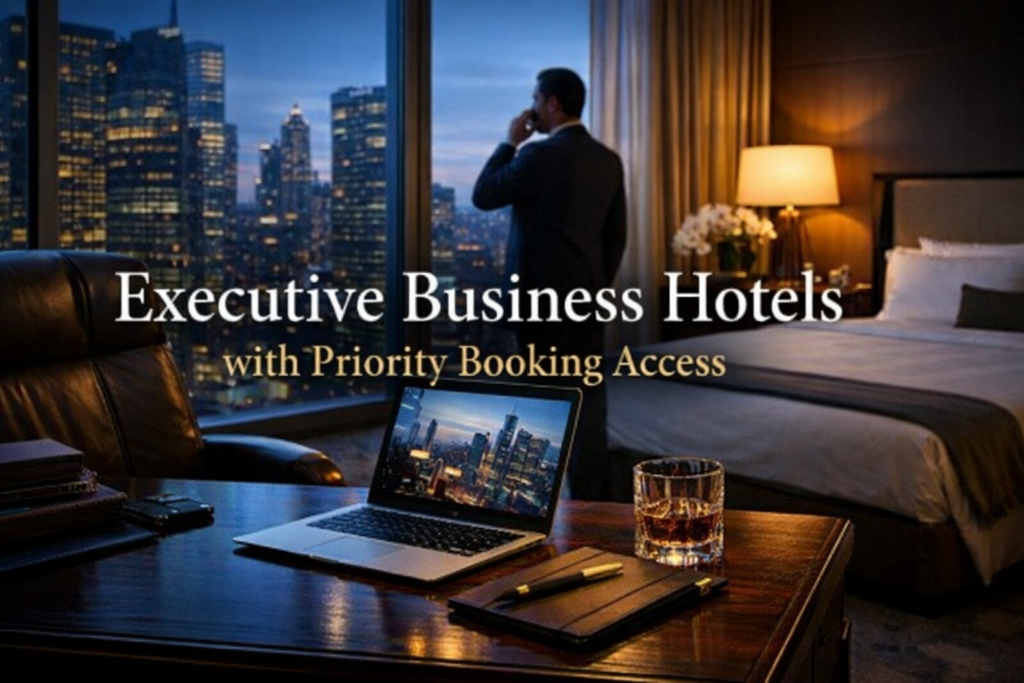
Executive Business Hotels with Priority Booking Access
Executive Business Hotels If you travel like an executive, you already know the truth: the hotel isn’t just where you sleep. It’s your mobile headquarters, your quiet strategy room, your recovery center, and sometimes your deal-closing stage. For international luxury travelers, the difference between a smooth trip and a chaotic one often comes down to a single advantage—priority booking access—especially when premium inventory vanishes during a global conference, a board meeting week, or an unexpected client escalation.
This guide explores what makes executive business hotels with priority booking access worth the premium, what VIP services matter in real life, and how to select properties that support a luxury lifestyle while meeting enterprise-grade expectations for privacy, performance, and consistency. You’ll also see realistic scenarios and practical context that mirrors how high-performing travelers actually move.
Why Priority Booking Access Matters for International Luxury Travelers
Priority booking access is not a “nice perk.” It’s operational leverage. It gives you a higher probability of securing the right room type—often a club-level suite or executive floor—when demand spikes, and it reduces the hidden tax of last-minute compromises.
The real cost of “sold out” for executives
When a top-tier property is sold out, the fallback option usually costs more than money. You may lose time commuting from a less ideal location, you may miss the executive lounge that doubles as a quiet workspace, and you may sacrifice sleep quality because the room isn’t built for high-stakes recovery. In premium travel economics, that lost productivity can dwarf the nightly rate—especially for leaders whose time is priced like an asset.
Peak demand windows that trigger premium rates
Luxury business travel demand surges around financial roadshows, global summits, fashion weeks, major sporting events with corporate hospitality, and high-level diplomatic calendars. These spikes push up average daily rates, reduce suite availability, and turn “late checkout” into a negotiation. Priority access—through preferred partner programs, corporate travel management platforms, or elite status—helps you stay ahead of the availability curve while maintaining rate integrity.
What Defines an Executive Business Hotels in 2026
Not every five-star hotel is an executive business hotel. A luxury resort can be stunning and still fail at business-critical basics. Executive business hotels are built for decisive travelers who need excellence that’s repeatable, not just photogenic.
Location intelligence: airports, financial districts, embassies
The best executive hotels sit close to international airports, central business districts, private banking corridors, convention hubs, and key government or embassy zones. For premium travelers, proximity isn’t only convenience—it’s risk reduction, punctuality, and control. A 12-minute transfer can be the difference between arriving calm and arriving compromised.
Design that works: soundproofing, lighting, ergonomic zones (Executive Business Hotels)
Executive-grade rooms feel like a tuned instrument: soundproof windows, blackout systems that actually work, a desk that supports long sessions, and lighting scenes that switch from “presentation-ready” to “recovery mode” in seconds. These details matter because high-performance travel is about maintaining rhythm, not chasing aesthetics.
The “two-room mindset” inside one suite
The best suites behave like two rooms even if they’re one: a work zone and a rest zone, separated by layout, acoustics, and lighting. This is critical for confidential calls, deal review, and jet lag management. When you’re managing premium meetings across time zones, the room must support the cadence of your day, not fight it.
The Priority Booking Ecosystem (Executive Business Hotels)
Priority booking access typically sits inside a network of relationships—between travelers, corporate travel managers, preferred hotel partners, and loyalty systems designed for elite tiers.
Preferred partner programs and corporate travel management
A well-structured corporate travel program can unlock priority inventory and negotiated benefits, especially when paired with luxury travel management. This is where terms like preferred corporate rate, last-room availability, and VIP amenities start to matter. Priority access becomes a business tool: predictable availability, consistent service, and a smoother approval process for premium travel.
Loyalty tiers, elite status, and invitation-only access
Elite status is not only about points. In high-end travel, status can translate into suite upgrade priority, dedicated service teams, and faster resolution when something goes off-script. Invitation-only tiers—sometimes accessed through premium credit card partnerships or luxury travel advisors—can add another layer of booking priority during high-demand periods.
Rate integrity and last-room availability explained
“Last-room availability” sounds simple, but it’s powerful. It often means that as long as the hotel sells any room, your corporate agreement can still secure a booking—sometimes with a protected rate structure. While policies vary, the practical value is clear: fewer emergencies, fewer compromises, and fewer nights spent in a property that doesn’t match your executive standards.
Premium Facilities That Actually Move the Needle (Executive Business Hotels)
Luxury travelers appreciate beautiful design, but executives need facilities that create leverage—spaces and services that turn travel time into effective time.
Executive lounge upgrades beyond snacks
A true executive lounge is a productivity lounge. Look for private seating zones, reliable quiet hours, elevated food and beverage that’s meeting-friendly, and staff trained to handle discreet requests. The lounge becomes a premium alternative to crowded cafés and noisy lobbies—especially when you need a calm place for confidential calls or a rapid pre-meeting reset.
Private meeting spaces, boardroom-ready tech, and hybrid calls
The best executive hotels treat meeting technology like infrastructure, not decoration. That means high-quality screens, stable bandwidth, secure conferencing, and staff who can troubleshoot without drama. Hybrid meetings are now the norm for global teams, and executive hotels are increasingly judged by how frictionless those calls feel.
Cybersecurity and privacy expectations
Premium business travelers increasingly care about privacy-first service. Executive properties often provide secure floors, discreet entry points, and staff protocols that reduce exposure. Add in modern cybersecurity expectations—like secure networks and privacy-conscious front desk practices—and you get a hotel that feels like a controlled environment rather than a public stage.
VIP Services That Feel Invisible—In a Good Way (Executive Business Hotels)
The hallmark of VIP service is subtlety. You shouldn’t need to ask twice, and you shouldn’t need to explain why something matters.
Airport meet-and-greet, fast-track, chauffeured transfers
For international luxury travelers, airport friction is the first threat to a well-run itinerary. Meet-and-greet services, fast-track assistance, and chauffeured transfers can reduce stress and protect punctuality—especially in cities where traffic is unpredictable. The value isn’t only comfort; it’s reliability and time certainty, which is gold in executive travel.
Dedicated concierge, multilingual butler, and itinerary curation
A dedicated concierge can do more than book dinner. The best teams can coordinate meeting logistics, reserve private dining rooms, arrange secure transport, and create a premium itinerary that fits your calendar rather than forcing you into rigid time slots. For luxury lifestyle travelers, this often includes curated cultural experiences that feel exclusive without being loud.
Discreet security and secure floor access
High-profile travelers often need quiet protection, not visible complexity. Secure elevator access, private check-in, and discreet coordination can keep movement smooth and low-profile. In executive travel, privacy is a feature—sometimes as important as the suite itself.
Exclusive Experiences That Fit a Luxury Lifestyle (Executive Business Hotels)
Business travel doesn’t have to feel transactional. The best executive hotels turn the edges of your schedule into meaningful moments, without pulling you away from your purpose.
Michelin-level dining, chef’s table, and curated wine programs
Premium dining becomes a strategic asset when you’re hosting clients or rewarding your team after a long day. Hotels with acclaimed restaurants, private chef’s table experiences, and sommelier-led wine programs can elevate business dinners into memorable experiences—without requiring additional transport or planning.
Wellness as performance: recovery, sleep, and longevity (Executive Business Hotels)
Modern executives treat wellness like performance engineering. Expect top hotels to offer recovery-focused amenities: advanced fitness studios, personal training on demand, spa therapy designed for travel fatigue, and sleep-optimized rooms. Luxury travelers increasingly choose properties that protect energy levels—because the next meeting is always coming.
Spa timing that respects executive calendars
A great spa isn’t just luxurious; it’s schedule-aware. Early appointments, late sessions, express recovery treatments, and in-room options make wellness realistic for executives who can’t disappear for three hours. The best hotels treat your calendar like a constraint to respect, not a problem to fight.
Business-Critical Room Features
If the room is your headquarters, then features are your equipment. Executive travel demands technical reliability and a layout that supports real work.
Connectivity standards: Wi-Fi, wired options, and redundancy
Premium hotels increasingly offer robust Wi-Fi, but executives should look for redundancy: strong coverage, optional wired connections, and fast issue resolution. Connectivity is not a perk—it’s mission-critical infrastructure for remote leadership, financial analysis, and global communication.
Workflows: printing, scanning, private calls, and lighting scenes (Executive Business Hotels)
The small things are actually the big things. Printing a contract, scanning a signed document, making a quiet call at midnight without waking your partner—these aren’t luxury fantasies; they’re executive realities. Lighting scenes, comfortable seating for long sessions, and a room layout that keeps work separate from rest can protect your mental clarity in high-pressure weeks.
Priority Booking in Action
Priority booking sounds abstract until it saves your trip. Here are realistic scenarios that show why executive travelers pay for access.
Scenario 1: Same-day trip to a financial hub
A portfolio company calls. A meeting appears tomorrow morning in a major financial district. Standard inventory is gone, but your preferred partner relationship secures an executive floor room with early check-in and a quiet lounge. You arrive, refresh, take a private call, and walk to the meeting. The trip feels controlled instead of reactive—because priority access protected your base.
Scenario 2: Global summit week when inventory disappears (Executive Business Hotels)
During a major summit, hotels near the venue sell out weeks in advance. Standard booking channels show “no availability,” but an elite tier or luxury travel advisor can access protected inventory, sometimes including suites. That difference can keep you close to the event, reduce transport time, and preserve security and discretion when crowds are intense.
Scenario 3: Confidential deal team needing privacy
A deal team travels with sensitive information. The right executive hotel provides secure floor access, discreet check-in, private meeting rooms, and staff who understand privacy protocols. Priority booking access helps secure adjacent rooms or a suite layout that allows quick internal alignment without public exposure.
Selecting the Right Property Without Saying “How To”
Choosing an executive business hotel is less about chasing the most expensive option and more about matching strengths to purpose.
Matching hotel strengths to travel purpose
If your trip is meeting-heavy, prioritize lounge quality, meeting facilities, and location near the business district. If your trip blends work with luxury lifestyle moments, prioritize dining, wellness, and concierge capability. For international luxury travelers, the best hotel is the one that reduces friction while quietly elevating your experience.
Reading between the lines of perks and policies
Some perks look generous on paper but fail under pressure. A promised upgrade that never clears, a “late checkout upon availability” that disappears during peak days, or a lounge that is beautiful but noisy—these gaps show whether a property is truly executive-ready. Priority booking access paired with reliable service policies is what creates consistency.
The one question that reveals service quality
Ask whether the hotel can support your arrival and departure realities—early check-in, late checkout, and flexible arrangements—especially during high occupancy. The clarity and confidence in the response often tells you more than a glossy brochure ever could.
High-Value Packages and Corporate Benefits (Executive Business Hotels)
Premium travelers don’t just buy nights—they buy outcomes: sleep quality, productivity, and predictable service.
Suite guarantees, upgrades, and flexible cancellation
Some executive programs offer suite guarantees or confirmed upgrades, which is a major advantage when you need space for private meetings. Flexible cancellation is also a premium feature because executive schedules can shift fast. In luxury travel planning, flexibility is often worth more than a small discount.
Value stacking: lounge + transfers + credits + late checkout
The smartest premium bookings stack value: executive lounge access, airport transfers, dining credits, spa credits, and late checkout. When bundled properly, these benefits can deliver a better overall experience while supporting corporate travel policy requirements and finance-friendly documentation.
Payments, Compliance, and Finance-Friendly Travel (Executive Business Hotels)
Executive travel sits at the intersection of lifestyle and governance. A great hotel makes payments and compliance feel effortless.
Corporate cards, premium card benefits, and invoicing
Luxury business hotels often support corporate card programs, premium credit card benefits, and invoice structures designed for enterprise travelers. This can include itemized billing, VAT-ready documentation where relevant, and smooth handling of deposits and authorizations—details that keep finance teams confident and reimbursements frictionless.
Travel risk management and duty of care
International corporate travel increasingly requires duty-of-care alignment: location safety, emergency protocols, and reliable communications. Executive hotels that coordinate discreetly on transport, secure access, and late-night arrivals can become an essential part of the broader travel risk management strategy.
Documentation that keeps finance teams happy
Clean folios, consistent billing categories, and professional invoicing might not be glamorous, but they matter. Premium travel that creates accounting headaches is rarely sustainable. The best executive hotels understand this and support finance-grade documentation without needing repeated follow-ups.
Common Mistakes High-End Travelers Still Make (Executive Business Hotels)
Even experienced luxury travelers sometimes misjudge what they’re buying.
Over-indexing on “brand” and ignoring property-level execution
A global brand can still have uneven properties. Executive travel success depends on property-level consistency: staff training, lounge execution, room layout, and responsiveness. Priority booking access helps, but the property must be operationally excellent for the experience to hold.
Choosing a luxury hotel that is not an executive hotel
Some luxury hotels are built for leisure romance, not executive performance. They may lack quiet work zones, meeting infrastructure, or fast problem resolution. An executive business hotel should feel like a well-run private club: calm, capable, and ready for complexity.
The Future: Priority Access Meets AI and Personalization (Executive Business Hotels)
Luxury business travel is moving toward smarter access, faster resolution, and personalization that respects privacy.
Predictive availability and smart rebooking
Hotels and travel platforms increasingly use predictive demand signals to anticipate sell-outs and offer proactive options—like pre-approved alternates, smart rebooking, and upgrade forecasting. For executives, the win is fewer surprises and fewer moments spent negotiating availability.
Privacy-first personalization for VIP guests
Personalization is only valuable if it remains discreet. The best executive hotels personalize the experience—preferred pillow type, room temperature, meeting setup—without turning it into a public performance. Premium travelers want recognition that feels respectful, not intrusive.
Conclusion (Executive Business Hotels)
Executive business hotels with priority booking access are not about luxury for luxury’s sake. They are about control, consistency, and performance—wrapped in a premium travel experience that respects your time and protects your focus. When the right hotel secures the right room at the right moment, provides VIP services that remove friction, and delivers executive-grade privacy and wellness, your travel becomes a strategic advantage instead of a logistical gamble. For international luxury travelers, that’s the true definition of premium: not just comfort, but certainty.