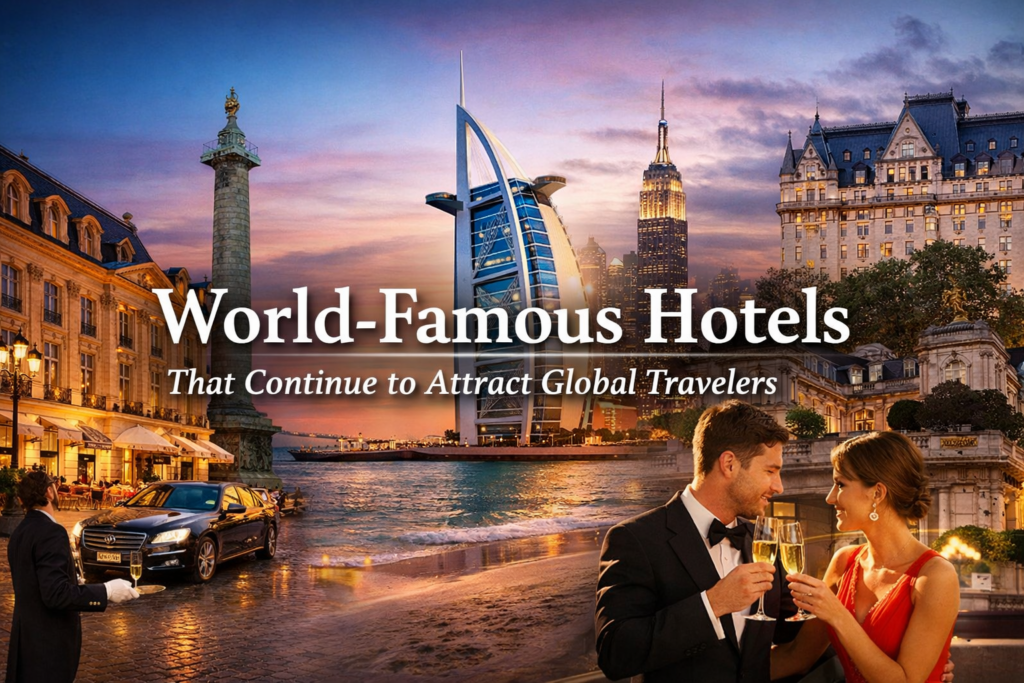
World-Famous Hotels That Continue to Attract Global Travelers
World-famous hotels don’t just offer a bed and a breakfast. They offer a story you get to live in. You know the type: the lobby feels like a movie set, the service is so smooth it’s almost invisible, and even the elevator ride somehow feels… important.
So why do certain world-famous hotels keep pulling in travelers year after year—despite new luxury resorts launching every season? Simple: they’ve mastered the full package. Not just luxury hospitality, but legend-level reputation, location advantage, and guest experience design that makes people want to come back (and post it everywhere).
Let’s unpack the real reasons these iconic properties stay fully booked—and look at real examples that prove it.
Why World-Famous Hotels Still Win in a World of New Luxury
New hotels can be shiny. But iconic hotels are magnetic. They don’t compete on “new.” They compete on heritage, brand prestige, and emotional value.
Think of it like fashion: a fresh sneaker drop is cool, but a classic watch is timeless.
They Sell a Feeling, Not Just a Room
The best luxury travel experiences aren’t built on marble floors alone. They’re built on feeling: romance, status, comfort, nostalgia, or that “I finally made it” moment.
They’re Positioned in Prime Travel Ecosystems
A legendary hotel usually sits where travelers already want to be: near city landmarks, business hubs, shopping districts, cultural centers, or beachfront icons. Prime location is a cheat code that never expires.
They Turn Service Into a Signature
World-famous properties obsess over “micro-moments”: remembering your name, your pillow preference, your anniversary, your coffee order. That’s not random kindness—it’s customer experience strategy.
What Makes a Hotel “World-Famous Hotels” in the First Place
Let’s be real: fame isn’t only about price. Some expensive hotels are forgettable. Some older hotels are legendary.
Here’s what usually creates global hotel fame:
Iconic History and Cultural Legacy
A hotel becomes famous when it becomes part of a city’s identity. The building itself becomes a landmark—like it belongs on a postcard.
Architectural Identity
Some hotels are famous because they look like nothing else. Their architecture becomes the brand.
Celebrity and Pop Culture Pull
If your hotel appears in films, hosts award after-parties, or becomes the unofficial HQ of global celebrities, you’re not just a hotel anymore—you’re a cultural stage.
Consistent Luxury Standards
Fame doesn’t last without consistency. People return because the experience stays excellent, not because the Instagram shot is pretty.
The World-Famous Hotels That Keep Attracting Global Travelers
Below are some of the most iconic hotels on the planet—properties that continue to draw international guests because they combine luxury amenities, heritage charm, service excellence, and unforgettable experiences.
The Ritz Paris (Paris, France) (World-Famous Hotels)
If Paris had a “luxury headquarters,” it would be The Ritz Paris.
Why Travelers Keep Coming Back (World-Famous Hotels)
This is not just a 5-star hotel—it’s a symbol of Parisian elegance. People come for the Place Vendôme location, the refined interiors, and the sense that you’re staying inside a piece of history.
Real-World Example
Travelers often plan an entire Paris itinerary around experiences linked to the hotel—like afternoon tea, a classic cocktail in the bar, or simply walking through the area for luxury shopping. That’s destination marketing without trying.
What You Can Copy From Their Strategy
They don’t chase trends. They deliver a consistent “Ritz” feeling: polished, classic, confident. In branding terms, they protect brand identity like a treasure vault.
The Savoy (London, UK) (World-Famous Hotels)
The Savoy isn’t just famous—it’s London-famous, which is basically a global title.
Why It Still Pulls Global Travelers (World-Famous Hotels)
It sits in a high-demand central London zone, close to theatres and iconic attractions. But the real hook is the blend of historic luxury with modern comfort.
Real-World Example
Many travelers book The Savoy for milestone moments—honeymoons, anniversaries, proposals—because it feels ceremonial. That’s experiential hospitality at work.
Context You Can Apply
They make guests feel like they’ve joined an exclusive story. That’s how you build guest loyalty beyond points and discounts.
The Plaza (New York City, USA) (World-Famous Hotels)
The Plaza is basically a celebrity in hotel form.
Why It’s Still a Global Magnet (World-Famous Hotels)
New York has endless hotels. But The Plaza has icon status, an unbeatable location near Central Park, and serious cultural weight.
Real-World Example
Even travelers who don’t stay there still visit for photos or dining. That means the property functions as both hotel and attraction, which boosts brand visibility like crazy.
The Hidden Strategy
The Plaza sells access to “New York’s classic luxury.” It’s an emotional purchase, not a logical one—pure luxury branding.
Raffles Singapore (Singapore) (World-Famous Hotels)
This hotel is proof that heritage tourism can be premium and modern.
Why Global Travelers Love It (World-Famous Hotels)
Raffles has a strong identity, legendary service, and historic prestige—yet it still feels relevant. Singapore travelers often want “the classic Singapore experience,” and Raffles delivers exactly that.
Real-World Example
The famous cocktail culture surrounding the hotel (and its iconic bar reputation) turns it into a must-visit even for non-guests—another example of hospitality marketing done right.
What Makes It Powerful
It blends tradition with consistency. That’s the sweet spot for luxury hospitality.
Burj Al Arab (Dubai, UAE) (World-Famous Hotels)
If “wow factor” were a building, it would be the Burj Al Arab.
Why Travelers Still Book It
Dubai has no shortage of luxury, but Burj Al Arab remains a top bucket-list stay because it’s instantly recognizable. It’s architectural branding on steroids.
Real-World Example
Many travelers book just one night as a “peak experience” then move to other hotels. And guess what? That still works, because the hotel becomes the highlight—aka the story they tell forever.
The Practical Lesson
Create a signature experience that feels exclusive and photo-worthy. That’s how you win in global tourism.
Hotel de Crillon (Paris, France) (World-Famous Hotels)
Another Paris legend, but with a different vibe: elegant, artistic, quietly powerful.
Why It Attracts Repeat Guests
Travelers who want luxury without loudness love this type of hotel. It’s premium, refined, and positioned perfectly for high-end travelers who value privacy and high-touch service.
Real-World Example
High-net-worth guests often choose hotels like this because they offer discreet luxury—private entrances, curated experiences, and concierge support that feels like having a personal assistant.
Key Insight
Luxury isn’t always louder. Sometimes it’s the calm confidence of premium service.
The Beverly Hills Hotel (Los Angeles, USA) (World-Famous Hotels)
Yes, the pink one. And yes, it’s still iconic.
Why Global Travelers Stay Here
Hollywood history, celebrity culture, and classic LA luxury. This hotel sells “you’re in the movie now.”
Real-World Example
Travelers choose it because it’s part of the LA fantasy—poolside scenes, palm trees, iconic dining. That’s lifestyle travel packaged into hospitality.
The Real Strategy
They protect their recognizable look and vibe. Consistency builds brand recall, and brand recall drives bookings.
What These Iconic Hotels Do Better Than Everyone Else
Let’s break down the shared playbook behind these legendary properties—so you can understand the context and apply it (without needing a “how to” label).
They Create Signature Experiences People Can Describe Easily
A famous hotel isn’t “nice.” It’s specific.
Examples of Signature Moments
- A legendary bar or cocktail ritual (Raffles)
- A landmark building shape (Burj Al Arab)
- A storied lobby with classic atmosphere (The Plaza)
- A timeless tea service (The Savoy)
This is experience design: guests can explain it in one sentence, which makes it easy to share.
They Make Planning Simple With Concierge-Level Guidance
Another big reason global travelers choose iconic hotels: decision fatigue is real. People don’t want to research everything.
Famous hotels often solve this by offering curated experiences: city tours, dining reservations, spa packages, driver services, and activity planning. That’s travel convenience wrapped in luxury.
They Invest in Reputation Like It’s a Business Asset
Reviews, press features, awards, social proof—these hotels treat reputation as a measurable resource. They also respond quickly to issues because brand trust is fragile.
The result? Travelers feel safer booking them because it’s a known standard.
They Understand the Psychology of “Once-in-a-Lifetime” Travel
Iconic hotels tap into a powerful buyer mindset: the “I deserve this” moment.
Whether it’s a honeymoon, anniversary, graduation trip, or first international vacation, these hotels position themselves as the “right” choice for a milestone. That’s emotional marketing, and it works.
How Travelers Can Choose the Right Iconic Hotel Without Regret
World-famous doesn’t always mean “perfect for you.” Here’s a practical way to pick smart:
Match the Hotel’s Personality to Your Travel Style
If You Want Classic Elegance
Look for heritage icons like The Ritz Paris or The Savoy.
If You Want Loud Luxury and Photos
Go for statement properties like Burj Al Arab.
If You Want Privacy and Calm
Hotels like Hotel de Crillon fit better than nightlife-heavy properties.
Use Location as Your First Filter
A hotel can be legendary, but if it’s far from your plans, you’ll waste time and money. Prioritize walkability, access to transit, and proximity to your must-do list.
Read Reviews for Patterns, Not Opinions
One angry review doesn’t matter. Ten reviews mentioning slow check-in? That’s a trend. Use that to set expectations and avoid disappointment.
Conclusion (World-Famous Hotels)
World-famous hotels keep attracting global travelers because they offer more than luxury—they offer identity, history, and a “main character” feeling that modern hotels often can’t replicate. These properties win through iconic branding, consistent service, prime locations, and signature experiences that guests remember (and share). If you want a trip that feels timeless—and not just trendy—staying at an iconic hotel can turn a normal vacation into a story worth retelling.